Search

Pump Training Goals and Objectives

50
Knowing Goals and Objectives Prior to Training Sets Your Patient Up for Success.

Content Developed By: Katherine Krieder Evans and Dana Roseman

Tool Created and Reviewed by: ADCES Tech Committee and the danatech staff

Educating Insulin Pump Users on Self-Management

Pre-pump and ongoing self-management education in the use of a pump should include correction of any misconceptions the person with diabetes (PWD) may have regarding insulin pump therapy. The diabetes care and education specialist must conduct an assessment of the individual’s knowledge of diabetes, knowledge deficits and preferred learning style to develop an individualized education plan. The individual’s age or education level should not be considered a deciding factor in their ability to utilize pump therapy.

At a minimum, the prospective pump user should have knowledge of the physiology of diabetes and an understanding of the relationship between insulin and food, stress, exercise and other factors that affect blood glucose. The foundation for advanced self-management with use of an insulin pump is best served with a thorough knowledge of diabetes management skills, including the ability to troubleshoot and problem-solve, recognize and respond to glucose patterns, and demonstrate appropriate self-care behaviors.9


Pump Education Objectives Include:

  • Establishment of goals
  • Competence in carbohydrate counting
  • Full understanding of insulin-to-carbohydrate ratios
  • Full understanding of correction (sensitivity) factors

And the ability to:

  • Manage hyperglycemia and hypoglycemia
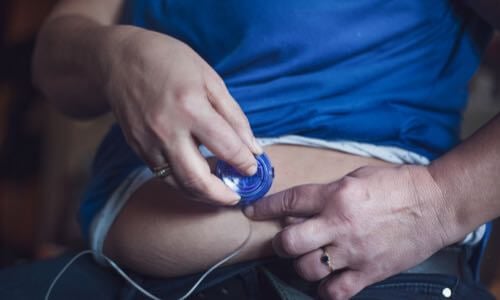
  • Properly fill and insert cartridge/reservoir and insert and change infusion sets
  • Detect infusion set and site issues
  • Manage sick days, exercise and travel
  • Obtain supplies
  • Troubleshoot and solve problems that may arise in use of their pump
  • Recognize the need for a back-up insulin regimen and how to safely switch back to injections
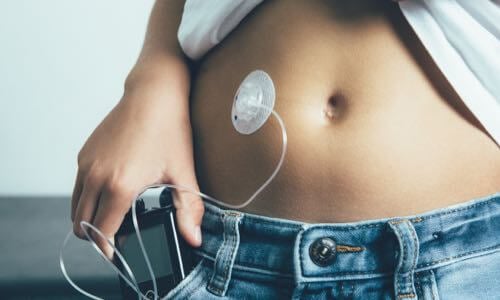
  • Determine how and where to wear the pump
  • Determine when and how to disconnect the pump

Pre-pump education varies widely based on the incoming knowledge of the person with diabetes and or caregiver. Some individuals complete two to three one-hour sessions with a verbal exchange of information. Others need a structured learning environment that is spread over an extended period of time with practical or written evaluations to gauge their level of comprehension. A group class covering pump education can be a time effective means for provisions of education. Reminder: The educational plan for children should include their parents and caregivers.9,10


References

Grouped by the claim each source supports. Primary and official sources — ADA, FDA, danatech, peer-reviewed — are tagged and listed first within each group. Compiled and verified July 2026.

2026 ADA Standards of Care & AID as preferred delivery
  1. 1. American Diabetes Association. 7. Diabetes Technology: Standards of Care in Diabetes—2026. Diabetes Care. 2026;49(Suppl 1):S150–S178. AID is the standard of care and preferred delivery method for people with type 1 diabetes who can safely use the device; rec. 7.27 supports open-source AID management advice.Primary
  2. 2. American Diabetes Association. ADA Releases "Standards of Care in Diabetes—2026." Press release, Dec 2025. Confirms new guidance removing prior treatment prerequisites before initiating CSII or AID.Primary
  3. 3. CGM: ADA 2026 Standards of Care. American Academy of Family Physicians. Documents Rec. 7.8a — no requirement for C-peptide, islet autoantibodies or insulin-treatment duration before CSII or AID.
What integration is — and why not every integrated pump is AID
  1. 4. Boughton CK, Hovorka R. Automated insulin delivery in adults. Review describing sensor-augmented pump therapy and low-glucose suspend / predictive low-glucose management as distinct from full AID.
  2. 5. Sensor-Augmented Insulin Pumps and Hypoglycemia Prevention in Type 1 Diabetes. Describes SAP with and without automated insulin suspension — the integration-without-full-AID category the page distinguishes.
  3. 6. Closed-Loop Insulin Delivery Versus Sensor-Augmented Pump Therapy in Older Adults With Type 1 Diabetes (ORACL). Diabetes Care. 2022;45(2):381. Contrasts closed-loop AID against SAP in "manual mode" with optional low-glucose suspend.
Meal input differs by system (including the iLet)
  1. 7. U.S. Food and Drug Administration. FDA Clears New Insulin Pump and Algorithm-Based Software (iLet). Confirms the iLet replaces conventional carb counting with a meal-announcement feature and initializes on body weight alone.Primary
  2. 8. danatech / ADCES. FDA Approves iLet Bionic Pancreas. danatech's own coverage of the meal-announcement mechanism.danatech
  3. 9. Beta Bionics. Meal Announcements Guide for iLet Bionic Pancreas. Manufacturer instruction: announce the meal when eating begins, not before; do not announce if more than 30 minutes have passed; do not use to correct highs.Manufacturer
Correction behavior, bolus workflow & insulin stacking
  1. 10. American Diabetes Association. 7. Diabetes Technology: Standards of Care in Diabetes—2026. (See ref. 1.) Supports individualized device selection and system-specific use rather than a single correction rule.Primary
  2. 11. Beta Bionics. Meal Announcements Guide for iLet Bionic Pancreas. (See ref. 9.) Instruction not to use meal announcements to correct a high, illustrating why correction workflow is system-specific.Manufacturer
CGM data gaps, questionable readings & confirming with a meter
  1. 12. diaTribe. Your Guide to the 2026 ADA Standards of Care. Summarizes the Standards' guidance to use a glucometer when CGM readings don't match symptoms, e.g. during warm-up periods.
  2. 13. American Diabetes Association. 7. Diabetes Technology: Standards of Care in Diabetes—2026. (See ref. 1.) Underlying recommendation for confirmatory glucose-meter use.Primary
Insulin-delivery failure: AID cannot confirm insulin is reaching the body
  1. 14. danatech / ADCES. Troubleshooting Unexplained Hyperglycemia. danatech's own step-by-step guidance: mechanical, behavioral and metabolic causes of unexplained highs; when to check ketones; when to seek emergency care for DKA.danatech
  2. 15. Howsmon DP, et al. Early Detection of Infusion Set Failure During Insulin Pump Therapy in Type 1 Diabetes. Confirms infusion-set failure can cause prolonged hyperglycemia or DKA, characterized by rising glucose despite increased insulin infusion.
  3. 16. Frequent Insulin Infusion Site Failures "a Huge Problem." Medscape, Mar 2026. Reports that a large share of AID users experience infusion-site failures; unexplained hyperglycemia can serve as a clinical proxy for undetected occlusion.

Primary = official ADA, FDA, danatech or peer-reviewed source. Manufacturer = manufacturer product or labeling page.

All URLs verified accessible July 2026. Device insulin clearances and indications should be confirmed against the current IFU. The page defers current-device specifics to Find & Compare, so no device-model citations are listed here.


The Danatech Digest

Join 25,000+ professionals who get our latest diabetes technology updates

DISCLAIMERS:

This site and its services do not constitute the practice of medical advice, diagnosis or treatment. Always talk to your diabetes care and education specialist or health care provider for diagnosis and treatment, including your specific medical needs. If you have or suspect that you have a medical problem or condition, please contact a qualified health care professional immediately. To find a diabetes care and education specialist near you, visit the ADCES finder tool.

ADCES and danatech curate product specifics and periodically review them for accuracy and relevance. As a result, the information may or may not be the most recent. We recommend visiting the manufacturer's website for the latest details if you have any questions.


danatech is Made Possible by Grant Funding and Industry Sponsorship