ADCES Fellows Spotlight: Finding Your Place in the Specialty
Aug 24, 2026, 11:26 AM
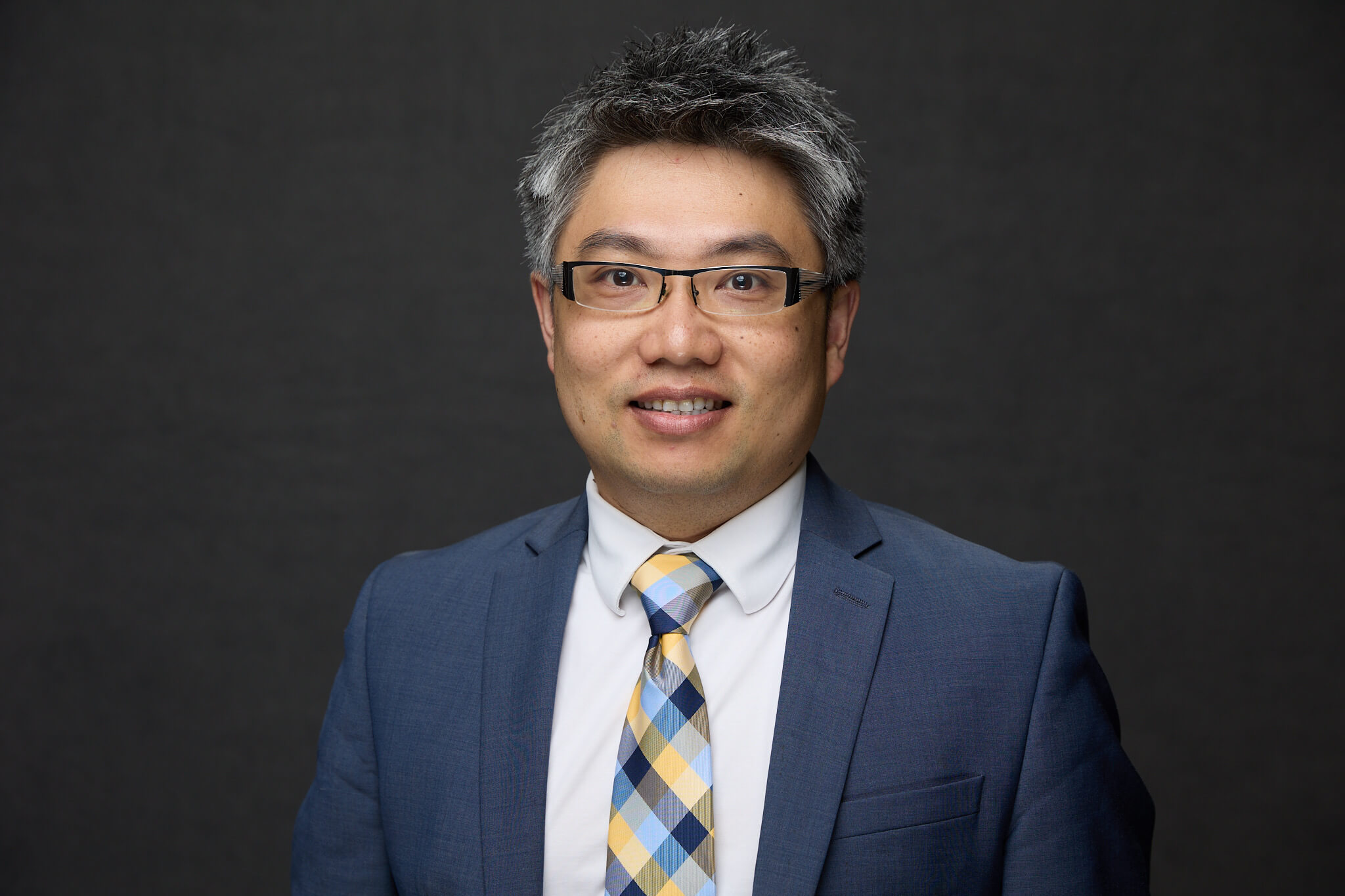
For Clipper F. Young, PharmD, MPH, BC-ADM, CDCES, BCGP, APP, FADCES, diabetes has been part of his life since childhood. Growing up in China, he watched his grandfather live with type 2 diabetes, an experience that stayed with him and eventually influenced his career. Today, Clipper’s work spans clinical care, research, education, community outreach, and mentorship.
In this ADCES Fellows Spotlight, Clipper talks about his journey into the diabetes care and education specialty, the challenges and opportunities he encountered along the way, the mentors who made a difference, and what he would tell those considering the field or just starting out.
Can you share your career trajectory? How did you get into the specialty, what did growth look like to you and what roles have you held or currently hold?
My connection to diabetes began long before I understood that it could become my career. Growing up in China, my grandfather lived with type 2 diabetes, and I remember walking beside him and trying, in my own way, to be his “diabetes police.” He eventually passed away from complications of diabetes. Looking back, I believe those experiences – perhaps, the second-hand exposure to diabetes through my grandpa – stayed with me and shaped the direction of my professional life.
My career path into diabetes care and education was not completely linear. I trained as a clinical pharmacist, completed a pharmacy education administration fellowship, pursued an MPH, and developed experience in ambulatory care, public health, higher education, community outreach, and clinical research. Over time, I realized that diabetes was the place where all of these interests could come together.
My work initially centered heavily on direct clinical care and diabetes education. From there, I became involved in building and evaluating community-based initiatives, including the Mobile Diabetes Education Center, or MOBEC, which brings diabetes and prediabetes screening and education into the community, and Pharm2Home Initiative, which extends chronic disease management beyond traditional clinic walls through home-based and telehealth services.
As my career progressed, my role began to expand from providing care to also building programs, creating research infrastructure, mentoring future physician-scientists, and contributing to national conversations about diabetes care and education. Today, I serve as a Clinical Pharmacy Specialist, Full Professor, Director of Clinical Research, and Co-Director for Distance Learning and Clinical Integration at Touro University California College of Osteopathic Medicine. My work now intersects diabetes and cardio-kidney-metabolic (CKM) care, clinical research, community health, medical education, diabetes technology, and artificial intelligence.
ADCES has been an important part of that journey. My involvement grew from local and state engagement to national service, including three years on the ADCES Board of Directors. Since then, my involvement has continued through the National Nominating Committee, the AI Practice Group, the DCES Competencies Working Group, and the Diabetes Technology Curriculum Pilot Project. Becoming a Fellow of ADCES in 2024 was especially meaningful because the organization has played an important role in my professional growth.
What were some of the biggest challenges you faced along the way and how did you navigate them?
One of my greatest challenges was – and still is – learning how to build a professional identity when my interests did not fit neatly into one box.
At different points, I have worked across clinical pharmacy, diabetes care and education, public health, community outreach, teaching, clinical research, diabetes technology, AI, and professional leadership. Earlier in my career, I sometimes wondered whether I needed to choose one path and stay within it.
Over time, I learned that the intersection of these areas was actually my strength. That realization did not happen overnight. I had to learn how to connect seemingly separate experiences into a coherent professional direction. Clinical practice helped me understand real-world problems. Public health helped me think about populations and systems. Community programs showed me the importance of access and implementation. Research helped me ask better questions. Teaching and mentoring helped me multiply the impact of what I had learned. More recently, AI and diabetes technology have given me new perspectives and insights into exploring longstanding problems in care delivery.
Another challenge was learning that meaningful work does not always begin with a formal title, established infrastructure, or immediate recognition. Some of the work I value most started with identifying an unmet need and asking: What can we build here?
That was true with community outreach, Pharm2Home, student research programs, the development of clinical research infrastructure, and our growing portfolio of work in generative AI, diabetes technology, and cardio-kidney-metabolic care. Recently, I received some intuitional research fundings for the AI work across CGM interpretation, CKD management, culturally responsive dietary recommendations, and complex diabetes pharmacotherapy, which reflects how that “builder” approach has become a research pipeline rather than a collection of isolated projects.
I have also learned that recognition does not always arrive at the same pace as contribution. My approach has been to continue developing expertise, stay close to real clinical and community needs, document outcomes, publish and present the work, and invest in relationships.
The lesson I would share is: Do not wait for perfect conditions or permission to begin meaningful work. Start with a real problem. Find good mentors and collaborators. Build something useful. Evaluate it honestly. Share what you learn. Then improve it. A career is rarely built through one dramatic opportunity. My version has been built through many smaller opportunities that gradually became connected. It has not been easy, but it has been meaningful and rewarding.
Did you have a mentor and if so, what did they teach you?
I have been fortunate to have several mentors throughout my career, and different mentors have taught me different things.
Drs. Gordon McCarter, PhD and Mike Ellerby, PhD taught me the importance of scientific rigor, disciplined thinking, and humanism in health care. Drs. Paul Lofholm, PharmD and Aglaia Panos, PharmD taught me how to lead, communicate, build programs, and think about pharmacy through a public health lens. Drs. Mark Gloudeman, PharmD and Jay Shubrook, DO simply gave me an opportunity before I was completely certain that I was ready for it. I am forever grateful for each and every one of them in shaping the person I am today.
One of the most important lessons I learned is that mentorship is not simply about giving advice. Great mentors see possibilities in people before those people are able to fully see those possibilities in themselves. That lesson has strongly influenced the way I mentor today.
Earlier in my career, I may have thought of mentorship primarily as helping a student finish a project, submit an abstract, or write a paper. Today, I think about mentorship differently. The project is important, but the larger goal is to help someone become more confident, capable, independent, and willing to take intellectual ownership of a problem.
My recent work has reinforced this perspective. Much of my current scholarship involves mentoring medical students across projects in AI, diabetes, CKM health, health services research, and community-based care. Many of those collaborations have progressed from internal projects to national presentations and peer-reviewed publications.
I have also learned that no single mentor can provide everything someone needs across an entire career. My career has benefited from what I think of as a constellation of mentors—people who have helped me think about clinical care, clinical research, education, public health, leadership, and difficult professional transitions.
At this stage of my career, I see mentorship as one of my greatest responsibilities. Someone opened doors for me. Part of my responsibility now is to open doors for others—and then help them become strong enough to open doors for the people who come after them.
How did you define success when you first started compared to how you define it now?
Early in my career, success was easier to count. It meant earning another credential, publishing another paper, receiving an award, being invited to speak, earning a promotion, or being selected for a leadership position. Those milestones still matter to me today. They represent hard work, validation, and opportunities that I do not take for granted.
But my definition of success has changed.
Today, I think much more about impact, multiplication, and durability.
· Did the work improve care for someone?
· Did we build something that continues after the initial funding or project period ends?
· Did a student I mentored discover confidence, intellectual independence, or a direction for their career?
· Did an idea become a research program rather than a single study?
· Did we create opportunities for other people to contribute and lead?
· Did something that began locally become useful to a broader professional community?
Earlier in my career, I wanted to prove that I could succeed. Today, I am more interested in what I can build, who I can help develop, and whether the work can continue without depending entirely on me. With that, success is increasingly about creating programs, people, ideas, and systems that can grow beyond my individual contribution.
What career advice would you offer to others in the field?
Diabetes care and education is one of the most intellectually challenging and deeply human areas of healthcare. The medications, devices, data streams, and technologies are evolving rapidly. Success in this field, however, has never been only about knowing the newest therapy options or devices. Diabetes is lived every day. It is influenced by food, family, culture, finances, mental health, health literacy, access, technology, social support, and many other realities. The best diabetes care and education specialists understand both the evidence and the lived experience of the individual.
My advice is to spend time with people living with diabetes and listen to their stories. Build strong clinical expertise, certainly -- but also develop curiosity about the person sitting in front of you. There is also enormous room to create an individual professional identity within this specialty. Diabetes care and education intersects with primary care, cardiology, nephrology, obesity, behavioral health, public health, research, digital health, policy, technology, and now artificial intelligence.
You do not have to copy someone else's career blueprint – it’s hidden somewhere in the work you are passionate about. Stay curious, stay humbled.