Search

CGM & Pump Integrations

Insulin Pumps · Training Clients & Patients

How CGM and insulin pumps work together in AID systems

When a CGM, an insulin pump and a dosing algorithm work together to adjust insulin automatically, they form an automated insulin delivery (AID) system. This page explains what that means, what the system does on its own and what still needs a person — for clinicians new to the technology to those who train on it daily.

Start here

What it means for a CGM and pump to work together

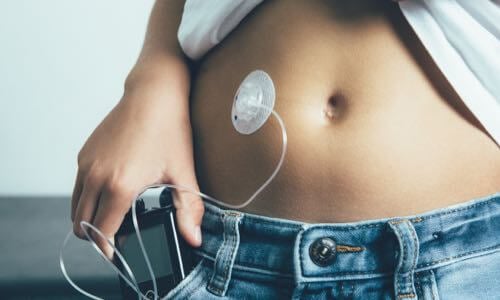
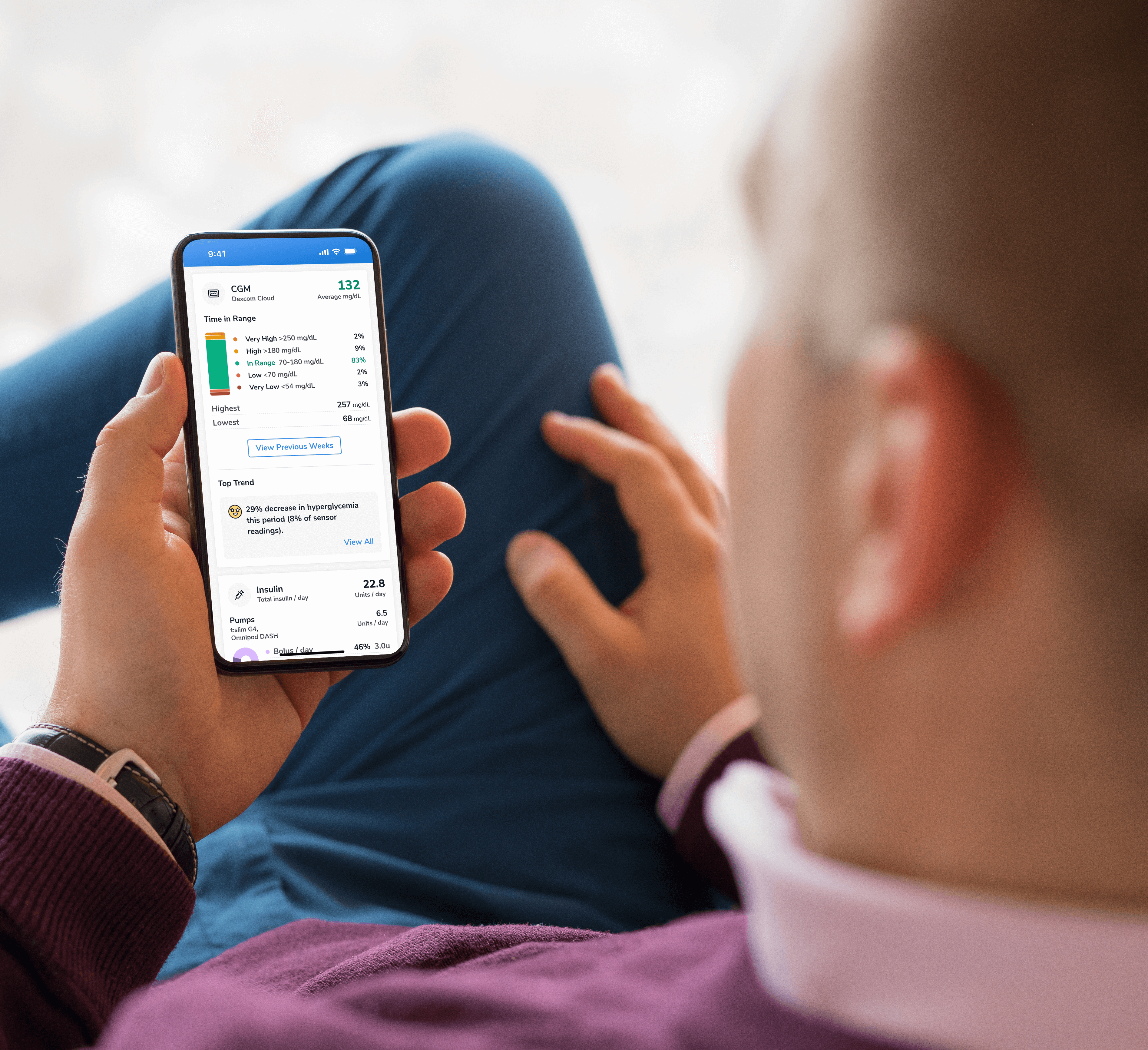
A continuous glucose monitor (CGM) measures glucose every few minutes. An insulin pump delivers insulin. When these two devices plus a dosing algorithm work together to automatically adjust insulin delivery, they form an automated insulin delivery (AID) system.

The CGM sends glucose readings to dosing software called an algorithm. The algorithm uses those readings, along with other available information, to direct automatic changes in insulin delivery. The algorithm may run on the pump, on a phone or on a separate controller.

Older setups did not automate dosing. The CGM showed a number and the person or clinician decided what to do about it. AID is the shift from the person reads the CGM and acts to the system reads the CGM and adjusts insulin, with the person supervising.

Not every pump showing CGM data is doing this

A pump can display CGM readings, or automatically suspend insulin when glucose is low or predicted to go low, without providing the fuller automated dosing that defines current AID systems. Those are useful features but they are not the same as AID. This page is about AID — where the algorithm is actively adjusting delivery based on glucose data.

For exact CGM and AID connectivity specifications, visit Find and Compare Insulin Delivery Systems.

What AID changes

Three things become true once the system adjusts insulin on its own

1
The system makes some insulin decisions automatically

Mainly the background (basal) insulin between meals, and on many systems, automatic corrections for high glucose.

2
The person still performs some tasks

Most importantly, giving the system information about meals. Current commercially available AID systems in the U.S. still require some form of meal input.

3
Reviewing data means reading an interaction, not a single cause

A high or low may reflect meal input, insulin on board, delivery or absorption, activity, sensor information, settings and the algorithm's response. Separating these is the new clinical skill.

The single most useful habit: before teaching or troubleshooting, identify the exact system and learn what it automates, what the person still does and what happens when CGM data or insulin delivery are interrupted.

In practice

The questions that actually come up

None of these is exotic. They are the everyday reality of using an AID system, and each one ends with what it means for you at the point of care.

Select a question to see the explanation and the practical takeaway.

What happens when the CGM stops sending data?

The algorithm needs glucose readings to work. Sometimes it doesn't get them: during sensor warm-up, at the end of a sensor's life, or when the signal is interrupted — for example, distance between components or another communication problem.

The system may continue delivering insulin when full automation is unavailable, but its behavior and on-screen terminology differ by product. Some fall back to preset basal rates, some limit automation, some deliver insulin based on recent history.

What this means for you

Users should know how to recognize when the system has left full automation and what action, if any, is required. This is a common “why did my pump do that?” moment, and knowing the specific system's behavior is what resolves it.

Can the reading be trusted?

This is different from the CGM going quiet. Sometimes the CGM is sending a reading, but the reading may not accurately reflect current blood glucose. One example is a compression-related low, where pressure on the sensor produces a falsely low value.

This matters because the system may reduce or suspend insulin in response to a low that isn't real.

What this means for you

If a CGM reading doesn't match symptoms, expectations or the clinical situation — or if the system directs the user to check — confirm with a blood glucose meter and follow the device instructions. Do not assume a low is false simply because the person doesn't feel symptoms; hypoglycemia can occur without recognized symptoms.

Does the system correct highs on its own, or does the person still act?

Some AID systems only adjust background insulin. Others also deliver automatic correction doses when glucose runs high. And some expect the person to initiate a correction through the system's own bolus calculator. These are not the same, and the word “target” doesn't tell you which — you have to know the specific system.

The risk isn't correcting highs; it's giving a correction outside the system's recommended workflow. An additional dose given that way may overlap with insulin already delivered, increasing the risk of insulin stacking — the cumulative effect of overlapping insulin doses — and hypoglycemia.

What this means for you

Teach the correction process for the specific system, including when to use its bolus calculator and when an additional correction should be avoided.

Who handles meals?

In nearly every current system, the person still gives the system information about meals. But how differs. Some systems ask the person to enter carbohydrate amounts and initiate the system's recommended meal bolus, like a traditional pump. Others have the person announce the meal — “usual,” “more” or “less” — and the system determines the dose. The iLet, for example, independently determines meal doses from a meal-size announcement rather than conventional carbohydrate counting.

Meal timing also differs. Some systems use a bolus before eating; the iLet tells people to announce the meal when they start eating, not before, and not to announce if too much time has passed.

What this means for you

There is no single meal rule that's safe to teach across systems. “Always pre-bolus” is correct for some and wrong for others. Teach the meal workflow for the device the person actually uses.

What about exercise?

Physical activity can be challenging because the system responds to glucose data but does not know the person's activity plans — unless the person uses the appropriate feature or adjusts the plan as instructed. Most systems offer an activity mode or a temporary higher target to reduce insulin around exercise.

What this means for you

The activity feature is one input, not the whole plan. Exercise planning should also consider the system's instructions, insulin on board, glucose level and direction, food and the type, timing and duration of activity. Note that a prolonged reduction or interruption of insulin may contribute to later high glucose.

Can the system tell when insulin isn't reaching the body?

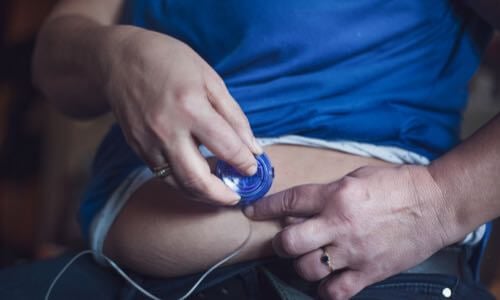
Not reliably. This is the safety point that's easiest to miss. An AID system can increase insulin delivery in response to rising glucose, but it cannot tell whether that insulin is actually getting into the body. An infusion-set problem, a displaced pod or cannula, an empty reservoir, an occlusion or spoiled insulin can all leave glucose high despite the system doing everything right.

Safety — what this means for you

Unexplained or persistent high glucose calls for attention to possible delivery failure — not just another correction. Automation adjusts the dose; it does not guarantee the insulin arrives. Every pump user should have a product-specific plan for checking ketones, replacing the infusion set or pod, using backup insulin and knowing when to seek urgent care.

Use this at the point of care

A five-question clinical check

Before teaching or troubleshooting any AID system, work through these five questions. They turn everything above into something you can actually do.

1

Which pump, CGM and algorithm is the person using?

2

How can they tell whether full automation is active?

3

What does the system do when CGM data are unavailable?

4

What meal, correction and activity actions does this system expect?

5

Does the person have a backup plan for sensor or insulin-delivery interruption?

These reflect the 2026 ADA Standards of Care emphasis on individualized system selection, initial and ongoing training, continued access to glucose monitoring and a backup plan — rather than assuming one workflow fits everyone.

This resource provides general education and does not replace the device instructions, individualized treatment plan or clinical judgment. Reviewed July 2026 against the 2026 ADA Diabetes Technology Standards of Care.

References

Grouped by the claim each source supports. Primary and official sources — ADA, FDA, danatech, peer-reviewed — are tagged and listed first within each group. Compiled and verified July 2026.

2026 ADA Standards of Care & AID as preferred delivery
  1. 1. American Diabetes Association. 7. Diabetes Technology: Standards of Care in Diabetes—2026. Diabetes Care. 2026;49(Suppl 1):S150–S178. AID is the standard of care and preferred delivery method for people with type 1 diabetes who can safely use the device; rec. 7.27 supports open-source AID management advice.Primary
  2. 2. American Diabetes Association. ADA Releases "Standards of Care in Diabetes—2026." Press release, Dec 2025. Confirms new guidance removing prior treatment prerequisites before initiating CSII or AID.Primary
  3. 3. CGM: ADA 2026 Standards of Care. American Academy of Family Physicians. Documents Rec. 7.8a — no requirement for C-peptide, islet autoantibodies or insulin-treatment duration before CSII or AID.
What integration is — and why not every integrated pump is AID
  1. 4. Boughton CK, Hovorka R. Automated insulin delivery in adults. Review describing sensor-augmented pump therapy and low-glucose suspend / predictive low-glucose management as distinct from full AID.
  2. 5. Sensor-Augmented Insulin Pumps and Hypoglycemia Prevention in Type 1 Diabetes. Describes SAP with and without automated insulin suspension — the integration-without-full-AID category the page distinguishes.
  3. 6. Closed-Loop Insulin Delivery Versus Sensor-Augmented Pump Therapy in Older Adults With Type 1 Diabetes (ORACL). Diabetes Care. 2022;45(2):381. Contrasts closed-loop AID against SAP in "manual mode" with optional low-glucose suspend.
Meal input differs by system (including the iLet)
  1. 7. U.S. Food and Drug Administration. FDA Clears New Insulin Pump and Algorithm-Based Software (iLet). Confirms the iLet replaces conventional carb counting with a meal-announcement feature and initializes on body weight alone.Primary
  2. 8. danatech / ADCES. FDA Approves iLet Bionic Pancreas. danatech's own coverage of the meal-announcement mechanism.danatech
  3. 9. Beta Bionics. Meal Announcements Guide for iLet Bionic Pancreas. Manufacturer instruction: announce the meal when eating begins, not before; do not announce if more than 30 minutes have passed; do not use to correct highs.Manufacturer
Correction behavior, bolus workflow & insulin stacking
  1. 10. American Diabetes Association. 7. Diabetes Technology: Standards of Care in Diabetes—2026. (See ref. 1.) Supports individualized device selection and system-specific use rather than a single correction rule.Primary
  2. 11. Beta Bionics. Meal Announcements Guide for iLet Bionic Pancreas. (See ref. 9.) Instruction not to use meal announcements to correct a high, illustrating why correction workflow is system-specific.Manufacturer
CGM data gaps, questionable readings & confirming with a meter
  1. 12. diaTribe. Your Guide to the 2026 ADA Standards of Care. Summarizes the Standards' guidance to use a glucometer when CGM readings don't match symptoms, e.g. during warm-up periods.
  2. 13. American Diabetes Association. 7. Diabetes Technology: Standards of Care in Diabetes—2026. (See ref. 1.) Underlying recommendation for confirmatory glucose-meter use.Primary
Insulin-delivery failure: AID cannot confirm insulin is reaching the body
  1. 14. danatech / ADCES. Troubleshooting Unexplained Hyperglycemia. danatech's own step-by-step guidance: mechanical, behavioral and metabolic causes of unexplained highs; when to check ketones; when to seek emergency care for DKA.danatech
  2. 15. Howsmon DP, et al. Early Detection of Infusion Set Failure During Insulin Pump Therapy in Type 1 Diabetes. Confirms infusion-set failure can cause prolonged hyperglycemia or DKA, characterized by rising glucose despite increased insulin infusion.
  3. 16. Frequent Insulin Infusion Site Failures "a Huge Problem." Medscape, Mar 2026. Reports that a large share of AID users experience infusion-site failures; unexplained hyperglycemia can serve as a clinical proxy for undetected occlusion.

Primary = official ADA, FDA, danatech or peer-reviewed source. Manufacturer = manufacturer product or labeling page.

All URLs verified accessible July 2026. Device insulin clearances and indications should be confirmed against the current IFU. The page defers current-device specifics to Find & Compare, so no device-model citations are listed here.

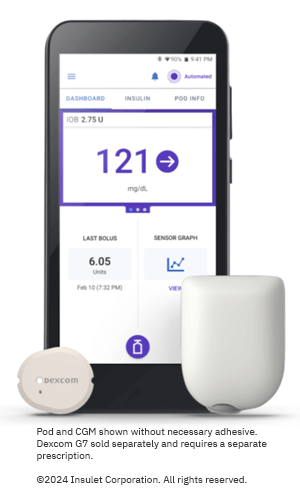
Omnipod 5 integrated with Dexcom G7 CGM

Find & Compare Insulin Delivery Devices

Filter by CGM compatibility, algorithm type and more to find the right device, fast.

Compare devices

The Danatech Digest

Join 25,000+ professionals who get our latest diabetes technology updates

DISCLAIMERS:

This site and its services do not constitute the practice of medical advice, diagnosis or treatment. Always talk to your diabetes care and education specialist or health care provider for diagnosis and treatment, including your specific medical needs. If you have or suspect that you have a medical problem or condition, please contact a qualified health care professional immediately. To find a diabetes care and education specialist near you, visit the ADCES finder tool.

ADCES and danatech curate product specifics and periodically review them for accuracy and relevance. As a result, the information may or may not be the most recent. We recommend visiting the manufacturer's website for the latest details if you have any questions.


danatech is Made Possible by Grant Funding and Industry Sponsorship